At first glance, the argument seems compelling: when domestic beef costs surge, why not bring in more beef from abroad—say, Argentina—and relieve the pressure on U.S. retailers, restaurants, and consumers? But dig a little deeper, and the logic begins to show serious cracks. In fact, leaning heavily on imported beef as a price-relief strategy can actually drive U.S. beef prices higher over time, especially for restaurants that rely on stable cost structures.
Here are 5 reasons why.
1. Argentina Imports Can’t Replace the Domestic Supply in Any Meaningful Way
Let’s be clear: Argentina is not going to flood the U.S. market and magically drop beef prices.
- Argentina’s beef exports to the U.S. currently account for roughly 2.1 % of all U.S. beef imports as of 2025. (“Argentina is the ninth largest source of beef imports in the U.S.)
- The U.S. total cattle inventory is at a historic low. For instance, one March 2025 report lists 86.7 million head of cattle and calves in the U.S., the smallest figure since the 1950s.
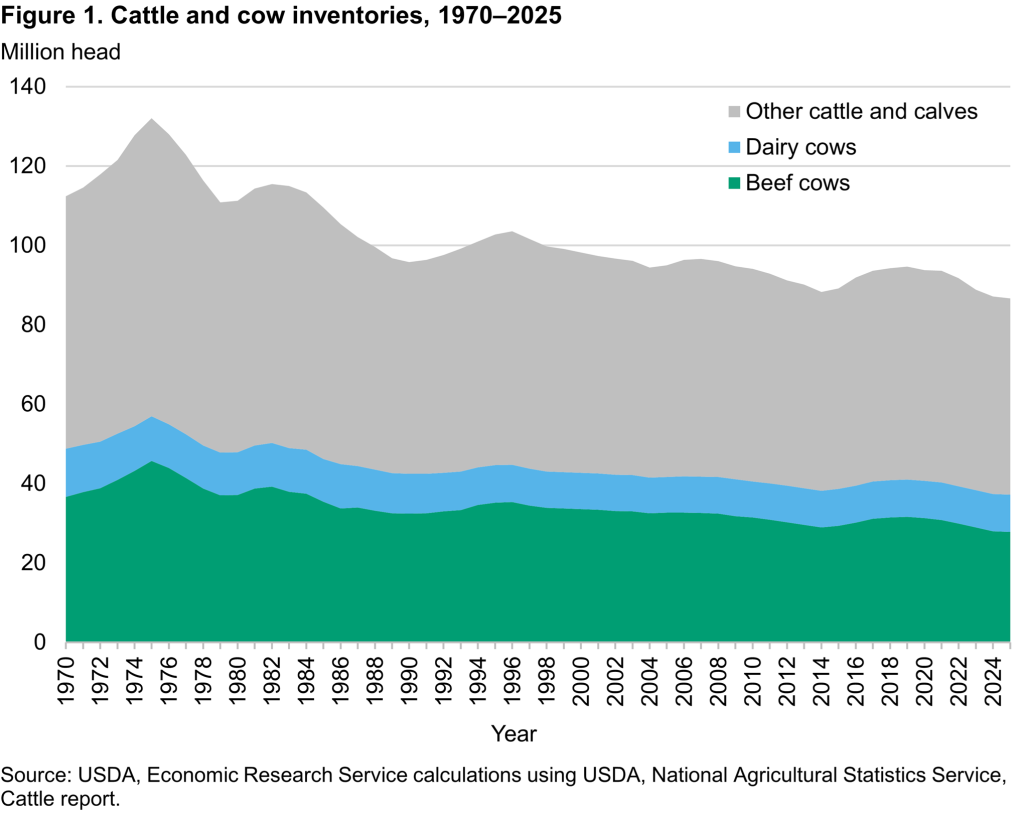
When you combine those facts, it’s clear that even a big percentage increase in Argentine beef imports is coming from a small base. It simply doesn’t move the supply dial enough to “fix” U.S. beef prices, especially at the level restaurants care about (steaks, menu items, higher-cut proteins).
2. Undermining Domestic Production Means Less U.S. Supply Later
If imports are used as a quick fix, there’s a significant risk that domestic producers will scale back to save costs due to a lack of profitability, and once domestic supply drops, prices become more dependent on foreign supply chains. This is exactly the point where you lose control of both pricing and supply.
- Domestic cattle inventories are shrinking: “Beef cow numbers on Jan. 1, 2025, totaled 27.86 million head — the smallest reported since 1961.” https://www.terrainag.com/insights/how-many-beef-cows-does-the-us-industry-need/
- Domestic production volumes remain constrained: “U.S. cattle inventory…the smallest in 73 years.” https://www.fb.org/market-intel/u-s-cattle-inventory-smallest-in-73-years
What that means for you as a restaurant owner: You may win short-term cost relief if imports are ramped up, but by doing so, there is a persistent risk of decreasing the long-term dependability of domestic supply. If domestic ranchers stop investing because they believe policy will always undercut them with imports, you end up in a vicious cycle where you rely more on imports anyway—and that means greater exposure to external shocks, global exchange rates, foreign policy, and global demand.

3. Foreign Producers Gain Leverage Over Time
When element A (domestic supply) slides downward and element B (import reliance) increases, the power dynamic shifts.
- Even when imports rise, U.S. retail beef prices continue climbing. One analysis found that despite record imports, beef prices rose 14 % year-over-year. https://www.prosperousamerica.org/beef-prices-blame-the-packers-not-americas-ranchers/
- Argentina’s producers are unlikely to act as price depressors. As one article states: “Experts caution that exporting too much beef could backfire for Argentina because that would drive up prices for consumers there.” https://apnews.com/article/9f8e9efd6e74e958c586ea1e32797ba2
Here’s the practical takeaway: as domestic production tightens and you become more dependent on foreign product, you give up pricing control. Whether you’re buying ground beef trimmings or premium sirloins, you’ll face the consequences of that dependence. Imported beef isn’t inherently cheaper forever; you are vulnerable.
4. Politics Won’t Change the Fundamentals
It’s tempting to believe that because the government will open quotas or cut tariffs, prices will fall. But market fundamentals matter far more: herd size, feed costs, weather, global demand, trade policy, processing capacity.
For example, the U.S. announced it would quadruple the tariff-rate quota on Argentine beef to 80,000 metric tons in October 2025. According to Reuters, “Raising the tariff rate quota on Argentine beef to 80,000 metric tons will let the country ship more of its beef to the U.S. at a lower rate of duty. U.S. beef prices have set records due to tight cattle supplies and strong consumer demand.”
Yet some experts note the strategy is unlikely to significantly lower prices. According to one source, “Some are skeptical that importing Argentine beef will lower prices. The U.S. already imports a record amount of beef from other countries.”
So, while policy might shift supply boundaries slightly, if you’re in the restaurant business, you can’t bet your profit margins on the hope that it will permanently solve your cost problem. These are long-term structural issues with no instant switch.
5. Consolidated Packers & The Supply Chain Tightens Further
One final piece of the puzzle: even if more imports come in, the degree to which that translates into lower prices for restaurants (especially small restaurants) depends on how the supply chain is structured.
Some experts have stated: “Beef prices are at record highs—not because of U.S. ranchers… but because dependence on foreign imports and meat-packer consolidation have distorted the market.”
With large meat packers controlling the flow, and fewer U.S. cattle coming into the system, even added imports can still feed into the same bottlenecks—meaning the relief may not reach mainstream small independent restaurant owners.
That really translates into: even if Argentine beef grows, you might see minimal benefit, especially at the higher cut levels or in premium restaurants, because the downstream logistics, labeling, processing, and supply chain still have filters and cost layers.
What This Means for Your Restaurant
So where does this leave you, as a restaurant owner trying to manage food cost and menu strategy?
- Don’t count on imported beef to stabilize your menu costs. It may help marginally—but late, and likely in leaner, lower-value parts of your offering.
- Assume a higher beef cost structure for the foreseeable future. The domestic herd is down. Supply is tight. Dependence on outside sources is growing.
- Control what you can. Menu engineering, portion redesign, value mix, clear guest communication—all are levers you already have.
- Monitor the right indicators. Herd inventory numbers, feed prices, import quotas—don’t wait for the higher costs to arrive at your doorstep.
- Think long-term. If you rely on imports to stabilize pricing, you’re vulnerable to whichever foreign-market shocks come next.
Final Word
Opening U.S. import channels for Argentine beef sounds like a smart political move to soften price pressure—that part is true. But relying on that as your only cost solution? That’s incredibly risky. Because when domestic supply shrinks, foreign producers gain leverage, and you get caught between higher input costs and fewer margin options.
If you want to thrive in this era of tight supply and mounting cost pressure, work on what you can reliably control: your menu, your sourcing strategy, your value proposition, and your guest loyalty.
Because in the end, you don’t just compete on price—you compete on execution. And foreign beef might help marginally, but it won’t save you in the long term.
Stay focused. Stay strategic. And build a business that doesn’t depend exclusively on foreign imports.